
THE ONE VERSE ANSWER
LA RESPUESTA EN UN SOLO VERSÍCULO
In your opinion, what does it take for a person to go to heaven?
En tu opinión, ¿qué se necesita para que una persona vaya al cielo?
The Bible says:
La Biblia dice:
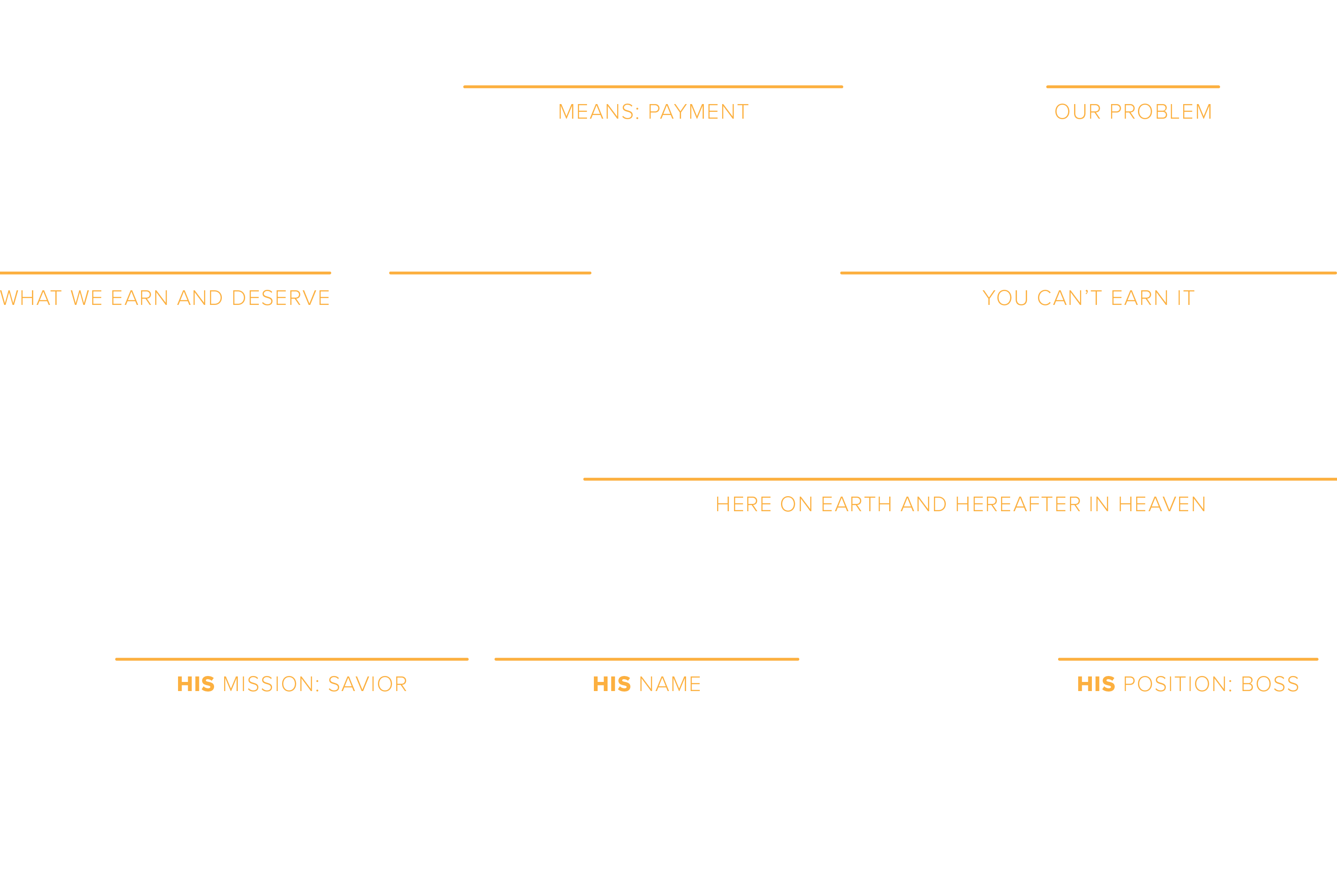
THE ABC'S OF SALVATION
EL ABC DE LA SALVACIÓN
Trusting Jesus as Savior and Lord is as simple as ABC.
Confiar en Jesús como Salvador y Señor es tan sencillo como el ABC.
A - ADMIT (ADMITIR)
Admit that you are a sinner and that you need God’s forgiveness.
“For all have sinned and fall short of the glory of God.” (Romans 3:23)
Admite que eres pecador y que necesitas el perdón de Dios. “Por cuanto todos pecaron y están destituidos de la gloria de Dios.” (Romanos 3:23)
B - BELIEVE (CREER)
Believe that Jesus Christ died for your sins on the cross and rose from the grave.
“For God so loved the world that he gave his one and only Son, that whoever believes in him shall not perish but have eternal life.” (John 3:16)
Cree que Jesucristo murió por tus pecados en la cruz y resucitó de entre los muertos. “Porque de tal manera amó Dios al mundo, que ha dado a su Hijo unigénito, para que todo aquel que en él cree no se pierda, mas tenga vida eterna.” (Juan 3:16)
C - CONFESS (CONFESAR)
Confess Jesus Christ as your Lord and Savior.
“If you declare with your mouth, ‘Jesus is Lord,’ and believe in your heart that God raised him from the dead, you will be saved.” (Romans 10:9)
Confiesa a Jesucristo como tu Señor y Salvador. “Que si confesares con tu boca que Jesús es el Señor, y creyeres en tu corazón que Dios le levantó de los muertos, serás salvo.” (Romanos 10:9)
If you Admit and Believe for the first time today, you can Confess and be saved by telling God something like this with a sincere heart:
Si hoy decides admitir y creer por primera vez, puedes confesar y ser salvo hablándole a Dios con un corazón sincero:
Dear God,
I admit that I am a sinner and that I need Your forgiveness. I believe that Jesus Christ died on the cross for my sins and rose from the dead. I turn from my sins and invite Jesus to come into my life. I confess Jesus as my personal Lord and Savior. I surrender my life to You and ask that You help me to follow You every day.
In Jesus’ name, Amen.
Querido Dios,
Admito que soy pecador y que necesito tu perdón. Creo que Jesucristo murió en la cruz por mis pecados y resucitó de entre los muertos. Me aparto de mis pecados y te pido que entres en mi vida. Confieso a Jesús como mi Señor y Salvador personal. Entrego mi vida a ti y te pido que me ayudes a seguirte cada día. En el nombre de Jesús, amén.
Congratulations and welcome to the family of faith! God has great things planned for you. A few things that will be helpful as you take your first steps as a Christ follower are:
¡Felicidades y bienvenido a la familia de la fe! Dios tiene grandes cosas preparadas para ti. Aquí tienes algunos pasos que pueden ayudarte al comenzar tu camino como seguidor de Cristo:
- Get a good bible and begin to pray to God. This may seem difficult at first, but it will be essential to your spiritual growth.
- Find a church. Many people do not like organized religion. Neither did Jesus. But He wants us to be connected to other Christians to help us in our journey.
- One of the first things Christ followers should do is get baptized. There is nothing magical or mystical about baptism. Baptism is simply public identification about a personal relationship with Jesus. It has been said that baptism is to the relationship with Jesus what a wedding ring is to a married couple.
- Tell someone what has happened to you. When people really meet Jesus, they cannot help but tell others about Him.
- Consigue una buena Biblia y comienza a orar a Dios. Puede parecer difícil al principio, pero es esencial para tu crecimiento espiritual.
- Encuentra una iglesia. Muchas personas no disfrutan de la religión organizada. Jesús tampoco, pero desea que estemos conectados con otros creyentes para ayudarnos en nuestro camino.
- Uno de los primeros pasos como creyente es el bautismo. No hay nada mágico ni místico en él; es una declaración pública de tu relación personal con Jesús. Se ha dicho que el bautismo es a la relación con Jesús lo que el anillo de bodas es para una pareja casada.
- Comparte con otros lo que te ha sucedido. Cuando las personas realmente conocen a Jesús, no pueden evitar hablar de Él.
QUESTIONS ABOUT CHRISTIANITY
PREGUNTAS SOBRE EL CRISTIANISMO
Most people answer around 100 questions every day. The answers to some questions do not greatly affect us. For instance, “Do you want fries with that?” “Would you like paper or plastic?” “Will you be paying with cash or card?” “Would you like heavy or light starch?” The answers to these questions do not cause the world to spin off its axis.
However, there are other questions to which the answers impact you for a lifetime. For instance, “What will you be when you grow up?” Most of us will find out ourselves laboring in some kind of profession, so it only makes sense to find something you can tolerate. “Will you marry me?” There are huge ramifications to this question. A spouse is the one person in your life who can bring you the greatest happiness or hurt. “How many kids do you want to have?” Children are a great blessing, but also a challenge.
All these questions are a part of the human experience, but there are other questions that have eternal ramifications for every person who has ever drawn breath on planet earth. These questions are really the questions behind every other question. Get the answers to these questions wrong and everything else in your life will be confused. Get the answers to these questions right and everything else in your life will make sense. Many people can answer one or two of these questions, but very few people can truly answer all of them. Consider the following questions:
La mayoría de las personas responde alrededor de 100 preguntas cada día. Las respuestas a algunas de ellas no afectan en gran medida nuestras vidas. Por ejemplo: “¿Quieres papas fritas con eso?”, “¿Prefieres papel o plástico?”, “¿Vas a pagar en efectivo o con tarjeta?”, “¿Lo quieres más ligero o más cargado?” Las respuestas a estas preguntas no cambian el rumbo de nuestra vida.
Sin embargo, hay otras preguntas cuyas respuestas tienen un impacto para toda la vida. Por ejemplo: “¿Qué quieres ser cuando seas grande?” La mayoría de nosotros terminará trabajando en algún tipo de profesión, por lo que tiene sentido buscar algo que podamos tolerar. “¿Quieres casarte conmigo?” Esta es una pregunta con enormes consecuencias. Un cónyuge puede ser la persona que más felicidad te brinde o la que más te haga sufrir. “¿Cuántos hijos quieres tener?” Los hijos son una gran bendición, pero también un desafío.
Todas estas preguntas forman parte de la experiencia humana, pero hay otras que tienen consecuencias eternas para toda persona que ha existido en la tierra. Estas son, en realidad, las preguntas detrás de todas las demás. Si te equivocas en las respuestas a estas preguntas, todo lo demás en tu vida estará confuso. Si respondes correctamente, todo lo demás en tu vida tendrá sentido.
Muchas personas pueden responder una o dos de estas preguntas, pero muy pocas pueden responderlas todas con certeza. Considera las siguientes preguntas:
1. DOES GOD EXIST? / ¿EXISTE DIOS?
Whether God exists is one of the most basic and important questions any person can consider. Opinions about God abound, but answering the question does God exist? demands more than a few seconds of attention and involves a wide range of ideas and evidence. Ultimately, what we see in human experience, science, logic, and history leads to a confident answer: yes, God exists.
El hecho de si Dios existe es una de las preguntas más básicas e importantes que una persona puede considerar. Existen muchas opiniones acerca de Dios, pero responder a la pregunta “¿existe Dios?” requiere más que unos pocos segundos de reflexión e involucra una amplia gama de ideas y evidencias. En última instancia, lo que observamos en la experiencia humana, la ciencia, la lógica y la historia nos lleva a una respuesta firme: sí, Dios existe.
2. WHERE DID I COME FROM? / ¿DE DÓNDE VENGO?
This question can be answered through two primary worldviews: Evolution and Creationism. Evolution suggests that we are the result of a gradual biological process spanning millions of years, culminating in complex life forms through mutations and natural selection. However, the Cambrian Explosion and the absence of gradual fossil records challenges this theory. In contrast, Creationism, rooted in the Bible, posits that we are specially created by God in His image, implying inherent worth and uniqueness, much like a masterpiece signed by a renowned artist. According to Creationism, humans are not merely creatures but divine creations with immeasurable value, reflecting God’s attention to detail, as seen even in our fingerprints.
Esta pregunta puede abordarse desde dos cosmovisiones principales: la evolución y el creacionismo. La evolución sugiere que somos el resultado de un proceso biológico gradual que se desarrolló durante millones de años, dando lugar a formas de vida complejas mediante mutaciones y selección natural. Sin embargo, eventos como la explosión cámbrica y la falta de registros fósiles completamente graduales presentan desafíos para esta teoría.
En contraste, el creacionismo, basado en la Biblia, afirma que fuimos creados de manera especial por Dios a su imagen, lo cual implica valor y singularidad inherentes, como una obra maestra firmada por un artista reconocido. Según esta perspectiva, los seres humanos no son simplemente criaturas, sino creaciones divinas con un valor incalculable, reflejando la atención al detalle de Dios, visible incluso en nuestras huellas dactilares.
3. WHY AM I HERE? / ¿POR QUÉ ESTOY AQUÍ?
People seek significance beyond mere temporal success. We are created by God for a purpose – to do good works as defined in the Bible. Our lives have deeper meaning when connected to God’s eternal story. This gives us significance both now and in the hereafter, transcending the pursuit of worldly achievements or accumulation of knowledge. By focusing on what God has planned and our connection to Him, we find our true purpose and avoid constantly seeking temporal successes or feeling unfulfilled. Our significance comes from playing a part in God’s greater, holy story unfolding on earth.
Las personas buscan un propósito más allá del éxito temporal. Fuimos creados por Dios con un propósito: realizar buenas obras según lo define la Biblia. Nuestras vidas adquieren un significado más profundo cuando están conectadas con la historia eterna de Dios.
Esto nos da sentido tanto ahora como en la eternidad, trascendiendo la búsqueda de logros materiales o la acumulación de conocimiento. Al enfocarnos en lo que Dios ha planeado y en nuestra relación con Él, encontramos nuestro verdadero propósito y evitamos vivir persiguiendo éxitos temporales o sintiéndonos vacíos.Nuestro valor y propósito provienen de formar parte de la gran historia santa de Dios que se desarrolla en la tierra.
4. WHAT HAPPENS WHEN I DIE? / ¿QUÉ PASA CUANDO MUERO?
Lots of different faith groups and people have claimed many things about the afterlife or lack of the afterlife. No one has ever made a more shocking and exclusive claim about himself than Jesus Christ, stating, “I am the way, and the truth, and the life. No one comes to the Father except through me.” (John 14:6) Jesus all at once affirmed that there is an afterlife and the Bible gives the details. Upon death, a person who has a relationship with Jesus goes to Heaven and a person without a relationship with Jesus goes to Hell. It sounds harsh, but Jesus is either right or wrong, and if right, his claims supersede all other claims (atheism, Hinduism, Buddhism, Islam, etc.). It comes down to this: do you trust Jesus and believe His claims? If you do, there is no need to look elsewhere.
Muchas religiones y personas han afirmado diversas cosas acerca de la vida después de la muerte, o incluso la ausencia de ella. Sin embargo, nadie ha hecho una afirmación más impactante y exclusiva sobre sí mismo que Jesucristo, al decir: “Yo soy el camino, la verdad y la vida; nadie viene al Padre sino por mí.” (Juan 14:6)
Jesús afirmó claramente que hay vida después de la muerte, y la Biblia nos da detalles al respecto. Al morir, una persona que tiene una relación con Jesús va al cielo, y una persona sin esa relación va al infierno. Puede sonar duro, pero Jesús está en lo correcto o no lo está;
y si lo está, sus afirmaciones están por encima de todas las demás (ateísmo, hinduismo, budismo, islam, etc.).
En resumen, todo se reduce a esto: ¿confías en Jesús y crees en lo que Él afirma? Si es así, no hay necesidad de buscar en otro lugar.
5. IF GOD IS GOOD, WHY DO BAD THINGS HAPPEN? / SI DIOS ES BUENO, ¿POR QUÉ SUCEDEN COSAS MALAS?
We live in a world of pain and suffering. There is no one who is not affected by the harsh realities of life. We must acknowledge that human beings, who are not eternal, infinite, or omniscients, cannot expect to fully understand God’s purposes and ways. God allows things to happen for a reason. Whether or not we understand His reasons, we must remember that God is good, just, loving, and merciful (Psalm 135:3). Often, bad things happen to us that we simply cannot understand. Instead of doubting God’s goodness, our reaction should be to trust Him. “Trust in the LORD with all your heart and lean not on your own understanding; in all your ways acknowledge Him, and He will make your paths straight” (Proverbs 3:5–6). We walk by faith, not by sight.
Vivimos en un mundo lleno de dolor y sufrimiento. No hay nadie que no sea afectado por las duras realidades de la vida.
Debemos reconocer que los seres humanos, que no somos eternos, infinitos ni omniscientes, no podemos esperar comprender completamente los propósitos y caminos de Dios.
Dios permite que ocurran cosas por una razón. Aunque no siempre entendamos sus motivos, debemos recordar que Dios es bueno, justo, amoroso y misericordioso (Salmo 135:3). A menudo nos suceden cosas malas que no podemos comprender. En lugar de dudar de la bondad de Dios, nuestra respuesta debe ser confiar en Él: “Confía en el Señor con todo tu corazón y no te apoyes en tu propia prudencia; reconócelo en todos tus caminos, y Él enderezará tus veredas.” (Proverbios 3:5-6) Caminamos por fe, no por vista.
6. IS THE BIBLE TRUSTWORTHY? / ¿ES CONFIABLE LA BIBLIA?
Using the same criteria by which we judge other historical works, not only is the Bible reliable, it is more reliable than any other comparable writings. Reliability is a question of truthfulness and accurate copying. Writings that are historically and factually correct and that have been faithfully preserved over time would be considered reliable. Higher levels of historical verification and better confidence in transmission make it easier to determine whether an ancient work is worthy of trust. By those measures, we can consider the Bible trustworthy.
Utilizando los mismos criterios con los que evaluamos otras obras históricas, la Biblia no solo es confiable, sino que es más confiable que cualquier otro escrito comparable. La confiabilidad tiene que ver con la veracidad y la fidelidad en la transmisión de los textos.
Los escritos que son históricamente y factualmente correctos, y que han sido preservados fielmente a lo largo del tiempo, se consideran confiables. Cuanto mayor sea la evidencia histórica y la precisión en su transmisión, mayor será la confianza en su contenido. Bajo estos criterios, podemos considerar que la Biblia es digna de confianza.
7. DID JESUS RISE FROM THE DEAD? / ¿JESÚS RESUCITÓ DE ENTRE LOS MUERTOS?
The resurrection of Jesus Christ is one of the foundations upon which Christianity is built (1 Corinthians 15:3–4). The virgin birth (Isaiah 7:14; Matthew 1:18; Luke 1:27), the deity of Christ (1 John 4:15, 5:5; John 10:30), Jesus’ atonement for sin (Romans 5:10–11; 2 Corinthians 5:21), and His crucifixion are non-negotiable truths, without which Christianity could not exist. Jesus’ resurrection from the dead was the crowning achievement that forever separates Him from any other religious leader who has ever been or will ever live. No other religious figure in history has ever prophesied His own death and resurrection–and then accomplished it.
La resurrección de Jesucristo es uno de los fundamentos sobre los que se basa el cristianismo (1 Corintios 15:3-4). El nacimiento virginal (Isaías 7:14; Mateo 1:18; Lucas 1:27), la divinidad de Cristo (1 Juan 4:15; 5:5; Juan 10:30), su obra expiatoria por el pecado (Romanos 5:10-11; 2 Corintios 5:21) y su crucifixión son verdades esenciales, sin las cuales el cristianismo no podría existir.
La resurrección de Jesús es el acontecimiento culminante que lo distingue para siempre de cualquier otro líder religioso que haya existido o exista. Ninguna otra figura religiosa en la historia ha profetizado su propia muerte y resurrección… y luego lo ha cumplido.
8. WHAT IS THE GOSPEL? / ¿QUÉ ES EL EVANGELIO?
The word gospel literally means “good news” and occurs 93 times in the Bible, exclusively in the New Testament. In Greek, it is the word euaggelion, from which we get our English words evangelist, evangel, and evangelical. The gospel is, broadly speaking, the whole of Scripture; more narrowly, the gospel is the good news concerning Christ and the way of salvation.
La palabra “evangelio” significa literalmente “buenas noticias” y aparece 93 veces en la Biblia, exclusivamente en el Nuevo Testamento. En griego es la palabra euaggelion, de donde provienen términos como evangelista y evangélico.
En un sentido amplio, el evangelio abarca toda la Escritura; en un sentido más específico, es la buena noticia acerca de Cristo y el camino de salvación.
HAVE MORE QUESTIONS?
EMAIL INFO@THECROSS.COM
Share the one verse answer with someone else. Click here to copy the link or direct them to thecross.com/one-verse.
¿TIENES MÁS PREGUNTAS?
Escribe a: ESPANOL@THECROSS.COM
Comparte la respuesta de “un versículo” con alguien más. Copia el enlace o dirígelo a: thecross.com/one-verse
THE ONE VERSE ANSWER
LA RESPUESTA EN UN SOLO VERSÍCULO
In your opinion, what does it take for a person to go to heaven?
En tu opinión, ¿qué se necesita para que una persona vaya al cielo?
The Bible says:
La Biblia dice:
THE ABC'S OF SALVATION
EL ABC DE LA SALVACIÓN
Trusting Jesus as Savior and Lord is as simple as ABC.
Confiar en Jesús como Salvador y Señor es tan sencillo como el ABC.
A - ADMIT (ADMITIR)
Admit that you are a sinner and that you need God’s forgiveness.
“For all have sinned and fall short of the glory of God.” (Romans 3:23)
Admite que eres pecador y que necesitas el perdón de Dios. “Por cuanto todos pecaron y están destituidos de la gloria de Dios.” (Romanos 3:23)
B - BELIEVE (CREER)
Believe that Jesus Christ died for your sins on the cross and rose from the grave.
“For God so loved the world that he gave his one and only Son, that whoever believes in him shall not perish but have eternal life.” (John 3:16)
Cree que Jesucristo murió por tus pecados en la cruz y resucitó de entre los muertos. “Porque de tal manera amó Dios al mundo, que ha dado a su Hijo unigénito, para que todo aquel que en él cree no se pierda, mas tenga vida eterna.” (Juan 3:16)
C - CONFESS (CONFESAR)
Confess Jesus Christ as your Lord and Savior.
“If you declare with your mouth, ‘Jesus is Lord,’ and believe in your heart that God raised him from the dead, you will be saved.” (Romans 10:9)
Confiesa a Jesucristo como tu Señor y Salvador. “Que si confesares con tu boca que Jesús es el Señor, y creyeres en tu corazón que Dios le levantó de los muertos, serás salvo.” (Romanos 10:9)
If you Admit and Believe for the first time today, you can Confess and be saved by telling God something like this with a sincere heart:
Si hoy decides admitir y creer por primera vez, puedes confesar y ser salvo hablándole a Dios con un corazón sincero:
Dear God,
I admit that I am a sinner and that I need Your forgiveness. I believe that Jesus Christ died on the cross for my sins and rose from the dead. I turn from my sins and invite Jesus to come into my life. I confess Jesus as my personal Lord and Savior. I surrender my life to You and ask that You help me to follow You every day.
In Jesus’ name, Amen.
Querido Dios,
Admito que soy pecador y que necesito tu perdón. Creo que Jesucristo murió en la cruz por mis pecados y resucitó de entre los muertos. Me aparto de mis pecados y te pido que entres en mi vida. Confieso a Jesús como mi Señor y Salvador personal. Entrego mi vida a ti y te pido que me ayudes a seguirte cada día. En el nombre de Jesús, amén.
Congratulations and welcome to the family of faith! God has great things planned for you. A few things that will be helpful as you take your first steps as a Christ follower are:
¡Felicidades y bienvenido a la familia de la fe! Dios tiene grandes cosas preparadas para ti. Aquí tienes algunos pasos que pueden ayudarte al comenzar tu camino como seguidor de Cristo:
- Get a good bible and begin to pray to God. This may seem difficult at first, but it will be essential to your spiritual growth.
- Find a church. Many people do not like organized religion. Neither did Jesus. But He wants us to be connected to other Christians to help us in our journey.
- One of the first things Christ followers should do is get baptized. There is nothing magical or mystical about baptism. Baptism is simply public identification about a personal relationship with Jesus. It has been said that baptism is to the relationship with Jesus what a wedding ring is to a married couple.
- Tell someone what has happened to you. When people really meet Jesus, they cannot help but tell others about Him.
- Consigue una buena Biblia y comienza a orar a Dios. Puede parecer difícil al principio, pero es esencial para tu crecimiento espiritual.
- Encuentra una iglesia. Muchas personas no disfrutan de la religión organizada. Jesús tampoco, pero desea que estemos conectados con otros creyentes para ayudarnos en nuestro camino.
- Uno de los primeros pasos como creyente es el bautismo. No hay nada mágico ni místico en él; es una declaración pública de tu relación personal con Jesús. Se ha dicho que el bautismo es a la relación con Jesús lo que el anillo de bodas es para una pareja casada.
- Comparte con otros lo que te ha sucedido. Cuando las personas realmente conocen a Jesús, no pueden evitar hablar de Él.
QUESTIONS ABOUT CHRISTIANITY
PREGUNTAS SOBRE EL CRISTIANISMO
Most people answer around 100 questions every day. The answers to some questions do not greatly affect us. For instance, “Do you want fries with that?” “Would you like paper or plastic?” “Will you be paying with cash or card?” “Would you like heavy or light starch?” The answers to these questions do not cause the world to spin off its axis.
However, there are other questions to which the answers impact you for a lifetime. For instance, “What will you be when you grow up?” Most of us will find out ourselves laboring in some kind of profession, so it only makes sense to find something you can tolerate. “Will you marry me?” There are huge ramifications to this question. A spouse is the one person in your life who can bring you the greatest happiness or hurt. “How many kids do you want to have?” Children are a great blessing, but also a challenge.
All these questions are a part of the human experience, but there are other questions that have eternal ramifications for every person who has ever drawn breath on planet earth. These questions are really the questions behind every other question. Get the answers to these questions wrong and everything else in your life will be confused. Get the answers to these questions right and everything else in your life will make sense. Many people can answer one or two of these questions, but very few people can truly answer all of them. Consider the following questions:
La mayoría de las personas responde alrededor de 100 preguntas cada día. Las respuestas a algunas de ellas no afectan en gran medida nuestras vidas. Por ejemplo: “¿Quieres papas fritas con eso?”, “¿Prefieres papel o plástico?”, “¿Vas a pagar en efectivo o con tarjeta?”, “¿Lo quieres más ligero o más cargado?” Las respuestas a estas preguntas no cambian el rumbo de nuestra vida.
Sin embargo, hay otras preguntas cuyas respuestas tienen un impacto para toda la vida. Por ejemplo: “¿Qué quieres ser cuando seas grande?” La mayoría de nosotros terminará trabajando en algún tipo de profesión, por lo que tiene sentido buscar algo que podamos tolerar. “¿Quieres casarte conmigo?” Esta es una pregunta con enormes consecuencias. Un cónyuge puede ser la persona que más felicidad te brinde o la que más te haga sufrir. “¿Cuántos hijos quieres tener?” Los hijos son una gran bendición, pero también un desafío.
Todas estas preguntas forman parte de la experiencia humana, pero hay otras que tienen consecuencias eternas para toda persona que ha existido en la tierra. Estas son, en realidad, las preguntas detrás de todas las demás. Si te equivocas en las respuestas a estas preguntas, todo lo demás en tu vida estará confuso. Si respondes correctamente, todo lo demás en tu vida tendrá sentido.
Muchas personas pueden responder una o dos de estas preguntas, pero muy pocas pueden responderlas todas con certeza. Considera las siguientes preguntas:
1. DOES GOD EXIST? / ¿EXISTE DIOS?
Whether God exists is one of the most basic and important questions any person can consider. Opinions about God abound, but answering the question does God exist? demands more than a few seconds of attention and involves a wide range of ideas and evidence. Ultimately, what we see in human experience, science, logic, and history leads to a confident answer: yes, God exists.
El hecho de si Dios existe es una de las preguntas más básicas e importantes que una persona puede considerar. Existen muchas opiniones acerca de Dios, pero responder a la pregunta “¿existe Dios?” requiere más que unos pocos segundos de reflexión e involucra una amplia gama de ideas y evidencias. En última instancia, lo que observamos en la experiencia humana, la ciencia, la lógica y la historia nos lleva a una respuesta firme: sí, Dios existe.
2. WHERE DID I COME FROM? / ¿DE DÓNDE VENGO?
This question can be answered through two primary worldviews: Evolution and Creationism. Evolution suggests that we are the result of a gradual biological process spanning millions of years, culminating in complex life forms through mutations and natural selection. However, the Cambrian Explosion and the absence of gradual fossil records challenges this theory. In contrast, Creationism, rooted in the Bible, posits that we are specially created by God in His image, implying inherent worth and uniqueness, much like a masterpiece signed by a renowned artist. According to Creationism, humans are not merely creatures but divine creations with immeasurable value, reflecting God’s attention to detail, as seen even in our fingerprints.
Esta pregunta puede abordarse desde dos cosmovisiones principales: la evolución y el creacionismo. La evolución sugiere que somos el resultado de un proceso biológico gradual que se desarrolló durante millones de años, dando lugar a formas de vida complejas mediante mutaciones y selección natural. Sin embargo, eventos como la explosión cámbrica y la falta de registros fósiles completamente graduales presentan desafíos para esta teoría.
En contraste, el creacionismo, basado en la Biblia, afirma que fuimos creados de manera especial por Dios a su imagen, lo cual implica valor y singularidad inherentes, como una obra maestra firmada por un artista reconocido. Según esta perspectiva, los seres humanos no son simplemente criaturas, sino creaciones divinas con un valor incalculable, reflejando la atención al detalle de Dios, visible incluso en nuestras huellas dactilares.
3. WHY AM I HERE? / ¿POR QUÉ ESTOY AQUÍ?
People seek significance beyond mere temporal success. We are created by God for a purpose – to do good works as defined in the Bible. Our lives have deeper meaning when connected to God’s eternal story. This gives us significance both now and in the hereafter, transcending the pursuit of worldly achievements or accumulation of knowledge. By focusing on what God has planned and our connection to Him, we find our true purpose and avoid constantly seeking temporal successes or feeling unfulfilled. Our significance comes from playing a part in God’s greater, holy story unfolding on earth.
Las personas buscan un propósito más allá del éxito temporal. Fuimos creados por Dios con un propósito: realizar buenas obras según lo define la Biblia. Nuestras vidas adquieren un significado más profundo cuando están conectadas con la historia eterna de Dios.
Esto nos da sentido tanto ahora como en la eternidad, trascendiendo la búsqueda de logros materiales o la acumulación de conocimiento. Al enfocarnos en lo que Dios ha planeado y en nuestra relación con Él, encontramos nuestro verdadero propósito y evitamos vivir persiguiendo éxitos temporales o sintiéndonos vacíos.Nuestro valor y propósito provienen de formar parte de la gran historia santa de Dios que se desarrolla en la tierra.
4. WHAT HAPPENS WHEN I DIE? / ¿QUÉ PASA CUANDO MUERO?
Lots of different faith groups and people have claimed many things about the afterlife or lack of the afterlife. No one has ever made a more shocking and exclusive claim about himself than Jesus Christ, stating, “I am the way, and the truth, and the life. No one comes to the Father except through me.” (John 14:6) Jesus all at once affirmed that there is an afterlife and the Bible gives the details. Upon death, a person who has a relationship with Jesus goes to Heaven and a person without a relationship with Jesus goes to Hell. It sounds harsh, but Jesus is either right or wrong, and if right, his claims supersede all other claims (atheism, Hinduism, Buddhism, Islam, etc.). It comes down to this: do you trust Jesus and believe His claims? If you do, there is no need to look elsewhere.
Muchas religiones y personas han afirmado diversas cosas acerca de la vida después de la muerte, o incluso la ausencia de ella. Sin embargo, nadie ha hecho una afirmación más impactante y exclusiva sobre sí mismo que Jesucristo, al decir: “Yo soy el camino, la verdad y la vida; nadie viene al Padre sino por mí.” (Juan 14:6)
Jesús afirmó claramente que hay vida después de la muerte, y la Biblia nos da detalles al respecto. Al morir, una persona que tiene una relación con Jesús va al cielo, y una persona sin esa relación va al infierno. Puede sonar duro, pero Jesús está en lo correcto o no lo está;
y si lo está, sus afirmaciones están por encima de todas las demás (ateísmo, hinduismo, budismo, islam, etc.).
En resumen, todo se reduce a esto: ¿confías en Jesús y crees en lo que Él afirma? Si es así, no hay necesidad de buscar en otro lugar.
5. IF GOD IS GOOD, WHY DO BAD THINGS HAPPEN? / SI DIOS ES BUENO, ¿POR QUÉ SUCEDEN COSAS MALAS?
We live in a world of pain and suffering. There is no one who is not affected by the harsh realities of life. We must acknowledge that human beings, who are not eternal, infinite, or omniscients, cannot expect to fully understand God’s purposes and ways. God allows things to happen for a reason. Whether or not we understand His reasons, we must remember that God is good, just, loving, and merciful (Psalm 135:3). Often, bad things happen to us that we simply cannot understand. Instead of doubting God’s goodness, our reaction should be to trust Him. “Trust in the LORD with all your heart and lean not on your own understanding; in all your ways acknowledge Him, and He will make your paths straight” (Proverbs 3:5–6). We walk by faith, not by sight.
Vivimos en un mundo lleno de dolor y sufrimiento. No hay nadie que no sea afectado por las duras realidades de la vida.
Debemos reconocer que los seres humanos, que no somos eternos, infinitos ni omniscientes, no podemos esperar comprender completamente los propósitos y caminos de Dios.
Dios permite que ocurran cosas por una razón. Aunque no siempre entendamos sus motivos, debemos recordar que Dios es bueno, justo, amoroso y misericordioso (Salmo 135:3). A menudo nos suceden cosas malas que no podemos comprender. En lugar de dudar de la bondad de Dios, nuestra respuesta debe ser confiar en Él: “Confía en el Señor con todo tu corazón y no te apoyes en tu propia prudencia; reconócelo en todos tus caminos, y Él enderezará tus veredas.” (Proverbios 3:5-6) Caminamos por fe, no por vista.
6. IS THE BIBLE TRUSTWORTHY? / ¿ES CONFIABLE LA BIBLIA?
Using the same criteria by which we judge other historical works, not only is the Bible reliable, it is more reliable than any other comparable writings. Reliability is a question of truthfulness and accurate copying. Writings that are historically and factually correct and that have been faithfully preserved over time would be considered reliable. Higher levels of historical verification and better confidence in transmission make it easier to determine whether an ancient work is worthy of trust. By those measures, we can consider the Bible trustworthy.
Utilizando los mismos criterios con los que evaluamos otras obras históricas, la Biblia no solo es confiable, sino que es más confiable que cualquier otro escrito comparable. La confiabilidad tiene que ver con la veracidad y la fidelidad en la transmisión de los textos.
Los escritos que son históricamente y factualmente correctos, y que han sido preservados fielmente a lo largo del tiempo, se consideran confiables. Cuanto mayor sea la evidencia histórica y la precisión en su transmisión, mayor será la confianza en su contenido. Bajo estos criterios, podemos considerar que la Biblia es digna de confianza.
7. DID JESUS RISE FROM THE DEAD? / ¿JESÚS RESUCITÓ DE ENTRE LOS MUERTOS?
The resurrection of Jesus Christ is one of the foundations upon which Christianity is built (1 Corinthians 15:3–4). The virgin birth (Isaiah 7:14; Matthew 1:18; Luke 1:27), the deity of Christ (1 John 4:15, 5:5; John 10:30), Jesus’ atonement for sin (Romans 5:10–11; 2 Corinthians 5:21), and His crucifixion are non-negotiable truths, without which Christianity could not exist. Jesus’ resurrection from the dead was the crowning achievement that forever separates Him from any other religious leader who has ever been or will ever live. No other religious figure in history has ever prophesied His own death and resurrection–and then accomplished it.
La resurrección de Jesucristo es uno de los fundamentos sobre los que se basa el cristianismo (1 Corintios 15:3-4). El nacimiento virginal (Isaías 7:14; Mateo 1:18; Lucas 1:27), la divinidad de Cristo (1 Juan 4:15; 5:5; Juan 10:30), su obra expiatoria por el pecado (Romanos 5:10-11; 2 Corintios 5:21) y su crucifixión son verdades esenciales, sin las cuales el cristianismo no podría existir.
La resurrección de Jesús es el acontecimiento culminante que lo distingue para siempre de cualquier otro líder religioso que haya existido o exista. Ninguna otra figura religiosa en la historia ha profetizado su propia muerte y resurrección… y luego lo ha cumplido.
8. WHAT IS THE GOSPEL? / ¿QUÉ ES EL EVANGELIO?
The word gospel literally means “good news” and occurs 93 times in the Bible, exclusively in the New Testament. In Greek, it is the word euaggelion, from which we get our English words evangelist, evangel, and evangelical. The gospel is, broadly speaking, the whole of Scripture; more narrowly, the gospel is the good news concerning Christ and the way of salvation.
La palabra “evangelio” significa literalmente “buenas noticias” y aparece 93 veces en la Biblia, exclusivamente en el Nuevo Testamento. En griego es la palabra euaggelion, de donde provienen términos como evangelista y evangélico.
En un sentido amplio, el evangelio abarca toda la Escritura; en un sentido más específico, es la buena noticia acerca de Cristo y el camino de salvación.
HAVE MORE QUESTIONS?
EMAIL INFO@THECROSS.COM
Share the one verse answer with someone else. Click here to copy the link or direct them to thecross.com/one-verse.
¿TIENES MÁS PREGUNTAS?
Escribe a: ESPANOL@THECROSS.COM
Comparte la respuesta de “un versículo” con alguien más. Copia el enlace o dirígelo a: thecross.com/one-verse